
Water Heater Maintenance in Wilmington, NC
About 80% of CFPUA’s water comes from the Cape Fear River, treated at the Sweeney plant. The rest comes from aquifer wells, and many homes outside the city have their own wells. River water is soft, while well water usually carries more minerals. Either way, regular maintenance is the cheapest way to make a heater last.
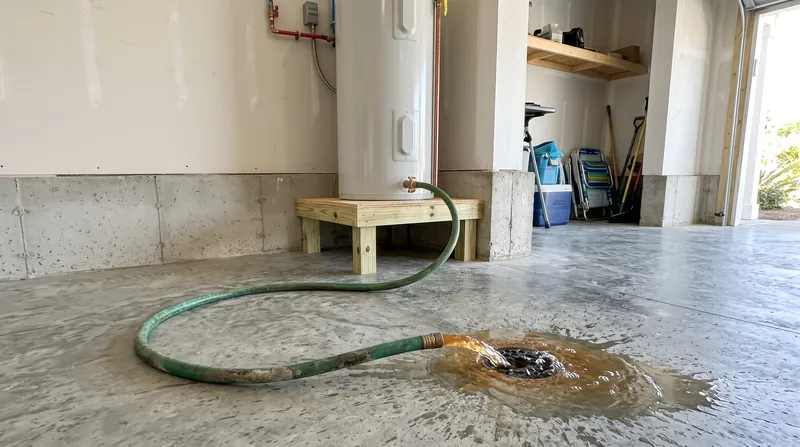
Flush once a year
Draining a few gallons a year keeps sediment from piling up, protects the lower element on electric tanks, and keeps gas burners from overworking. Homes on private wells often benefit from flushing more than once a year.
If the tank is old and has never been flushed, ask a plumber first. Hardened sediment can keep an old drain valve from sealing again.
Check the anode rod
The anode rod is a sacrificial metal rod inside the tank. It corrodes so the tank doesn’t. Once it’s gone, the tank starts to rust. Swapping a worn rod is inexpensive and can add years to the heater.
If your hot water smells like rotten eggs, bacteria in the water are usually reacting with a magnesium rod. That’s common on well water. An aluminum-zinc or powered anode often fixes it.
A full maintenance visit
- Sediment flush
- Anode rod inspection and replacement if needed
- Relief valve test
- Thermostat set to about 120°F
- Burner, flame, and vent check on gas units
- Rust check on fittings and vents, especially near the coast
For landlords with several rentals
Owners of several rentals or beach houses can have every heater checked in one visit. You get each tank’s age and condition, so replacements can be planned between tenants instead of during a no-hot-water call.
Need hot water back?
Call for a free estimate. No obligation, and you’ll talk to someone local.
Water Heater Maintenance: common questions
How often should I flush my water heater in Wilmington?
Once a year is a good habit. On a private well, consider twice a year, since well water usually carries more minerals.
Why is only my hot water discolored?
If cold water is clear, the cause is inside the heater: sediment or a corroding tank. A flush and anode rod check are the first steps. Rusty water from an old tank can mean it’s time to replace it.
What should my water heater temperature be?
About 120°F suits most households. It saves energy and reduces scald risk.
Serving Wilmington and nearby towns
Water Heater Maintenance is available throughout Wilmington and the surrounding area. Find your town for local details.